In Albury-Wodonga, the management of slopes is a critical aspect of geotechnical engineering, addressing the stability of natural and artificial inclines. This category encompasses the assessment, design, and remediation of slopes to prevent landslides, erosion, and structural failure. Given the region's undulating topography and proximity to the Murray River, slope stability directly impacts residential developments, infrastructure projects, and environmental conservation. Our expertise in slope stability analysis ensures that any incline, whether cut or fill, is evaluated for long-term performance under local conditions.
The local geology in Albury-Wodonga is dominated by the Wodonga Fault system and sedimentary formations, including the Silurian-aged Wombat Creek Group. These rocks are often interbedded with claystones and sandstones, which can weather to form expansive soils. The presence of colluvium and residual soils on hillslopes creates complex failure mechanisms, particularly after heavy rainfall. Understanding these geological nuances is essential for designing effective solutions, such as retaining wall design, which must account for groundwater seepage and soil plasticity.
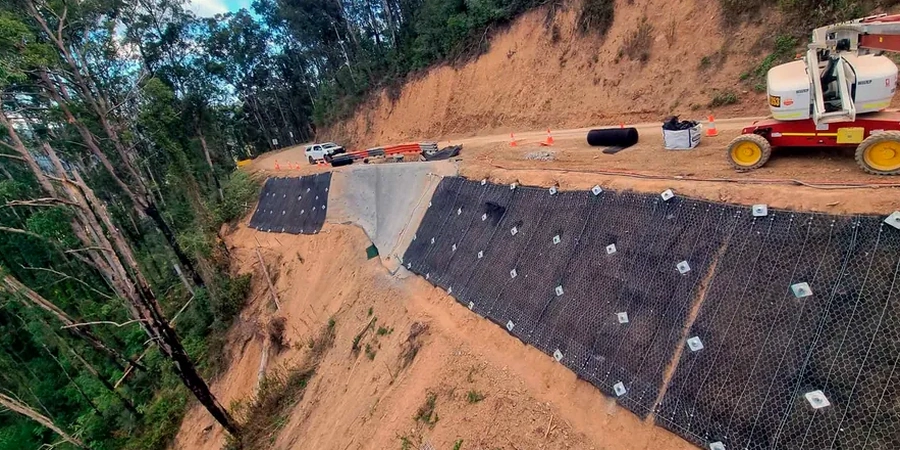
Australian standards, particularly AS 1170.4 (Structural Design Actions – Earthquake Loads) and AS 4678 (Earth Retaining Structures), govern slope engineering in New South Wales and Victoria, as Albury-Wodonga spans both states. Additionally, local council development control plans (DCPs) dictate specific requirements for cut-and-fill operations and vegetation management. Compliance with these regulations ensures that slopes are designed to withstand seismic events and extreme weather, which are increasingly common due to climate change.
Projects requiring slope services in this twin-city region range from suburban housing subdivisions on steep blocks to major road upgrades like the Hume Highway corridor. Commercial developments, such as shopping centers in Lavington or Wodonga's industrial estates, often necessitate benched slopes or reinforced earth structures. Environmental rehabilitation projects along the Murray River also rely on slope stabilization to prevent sedimentation and protect riparian habitats.
Available services
Quick answers
What are the common causes of slope failure in Albury-Wodonga?
Common causes include heavy rainfall saturating clay-rich soils, undermining from drainage issues, and weathering of weak rock layers. Human activities like improper cut-and-fill or removal of vegetation also trigger failures, particularly on slopes steeper than 1:3.
How does the local climate affect slope stability in the region?
Albury-Wodonga experiences a temperate climate with high-intensity summer storms and prolonged wet winters. These conditions rapidly increase pore water pressure in soils, reducing shear strength and leading to shallow landslides or deep-seated rotational failures.
What regulations apply to slope engineering in Albury-Wodonga?
Projects must comply with AS 1170.4 for seismic loads and AS 4678 for retaining structures. Local councils in Albury and Wodonga also enforce DCPs specifying maximum batter angles, drainage requirements, and vegetation retention, often requiring a geotechnical report.
Can slope issues be identified before buying property in the area?
Yes, a preliminary geotechnical assessment can reveal signs of instability such as tension cracks, leaning trees, or water seepage. Engaging a professional for a site inspection is recommended, especially on blocks with significant elevation changes near the Murray River or hillsides.